|
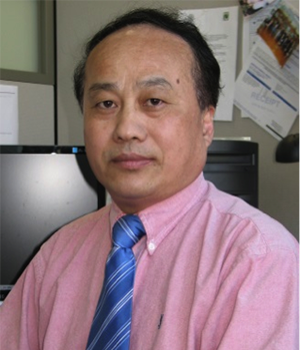
Dr. Jiujun Zhang
National Research Council, Canada
Dr. Jiujun Zhang is a Principal Research Officer at the National Research Council of Canada (NRC). Dr. Zhang is also a Fellow of the International Society of Electrochemistry (ISE). The technical expertise areas of Dr. Zhang are Electrochemistry, Photoelectrochemistry, Spectroelectrochemistry, Electrocatalysis, Fuel cells (PEMFC, SOFC, and DMFC), Batteries, and Supercapacitors. Dr. Zhang received his B.S. and M.Sc. in Electrochemistry from Peking University in 1982 and 1985, respectively, and Ph.D. in Electrochemistry from Wuhan University in 1988.
Click to read more.
Starting in 1990, he carried out three terms of postdoctoral research at the California Institute of Technology, York University, and the University of British Columbia. Dr. Zhang holds more than 10 adjunct professorships, including one at the University of Waterloo, one at the University of British Columbia and one at Peking University. Up to now, Dr. Zhang has more than 400 publications with approximately 10000 citations, including 220 refereed journal papers,12 edited /co-authored books, 30 book chapters, 110 conference keynotes and invited oral presentations, as well as 10 US/EU/WO/JP/CA patents, and produced in excess of 80 industrial technical reports. Dr. Zhang serves as the editor /editorial board member for several international journals as well as Editor for book series (Electrochemical Energy Storage and Conversion, CRC press). Dr. Zhang is an active member of The Electrochemical Society (ECS, the International Society of Electrochemistry (ISE), and the American Chemical Society (ACS), as well as the Canadian Institute of Chemistry (CIC). More...
Hide this content. |

|
Dr. David P. Wilkinson
University of British Columbia, Canada
Dr. David P. Wilkinson is a Professor at the Department of Chemical and Biological Engineering at the University of British Columbia, and Canada Research Chair (Tier 1). He is a fellow of several organizations including the Engineering Institute of Canada, the Canadian Academy of Engineering, and the Chemical Institute of Canada. Dr. Wilkinson received his B.A.Sc. Degree in Chemical Engineering from the University of British Columbia (UBC) in 1978 and his Ph.D. degree in Chemistry from the University of Ottawa in 1987, where his graduate work was done...
Click to read more.
with Professor Brian Conway. He has over 20 years of industrial experience in the areas of fuel cells and advanced lithium batteries. He also maintained a joint appointment with the National Research Council Institute for Fuel Cell Innovation for several years where he was a Principal Research Officer and a senior advisor. In addition to being a Professor at UBC, Dr. Wilkinson was the Director of the UBC Clean Energy Research Center (CERC) for four years. Prior to his university appointment Dr. Wilkinson was the Director, and then Vice President of Research at Ballard Power Systems Inc., involved with the research, development and application of fuel cell technology. Prior to joining Ballard in 1990 he was the group leader for chemistry and electrochemistry at Moli Energy and part of the team that developed the world’s first commercial rechargeable lithium AA battery. Dr. Wilkinson has received a number of awards for his work including the R.A. McLachlan Award, the highest award for professional engineering in British Columbia, the Electrochemical Society Battery Division Technology Award, a Lifetime Achievement Award from the Canadian Hydrogen and Fuel Cells Association, and the Grove Medal award for contributions to fuel cell technology. Dr. Wilkinson’s main research interests are in electrochemical and photochemical power devices and processes to create clean and sustainable energy. He has over 80 patents and more than 150 publications in peer-reviewed journals covering innovative research in these fields. He is a Board Committee Steering member of the International Academy of Electrochemical Energy Science (IAOEES).
More...
Hide this content. |

|
Dr. Jean-Pol Dodelet
Institut National de la Recherche Scientifique(INRS), Canada
Dr. Jean-Pol Dodelet is the Board Steering Committee member of the International Academy of Electrochemical Energy Science. Dr. Dodelet got his Ph.D in Physical-Chemistry in 1969 from “L’Université Catholique de Louvain”, Belgium. The same year, he left for Canada where he was Post-doctoral Fellow (from 1969 to 1971), then Research Associate (from 1971 to 1976) in Radiation Chemistry at “The University of Alberta”, Alberta, Canada.
Click to read more.
In 1976, he became Professor of Physical-Chemistry at “L’Université du Québec à Trois Rivières” in Québec, Canada, where he worked until 1981 on the photoconducting properties of molecular photoconductors. In 1981 he became Professor of Physical-Chemistry at INRS, which stands for “Institut National de la Recherche Scientifique”, in Québec, Canada, where he is still working presently. At INRS, he got interested in electrocatalysis, especially in non-noble electrocatalysts for the reduction of oxygen in PEM fuel cells, a research topic that he has now pursued since 1990. Dr. Dodelet has published approximately 250 refereed papers in books and scientific journals, including Science and Nature Communications. These publications have earned him to date approximately 7500 citations. He is also listed as co-inventor on 10 patents in the area of carbon nanotubes and electrocatalysis. In the last several years, Dr. Dodelet collaborated with General Motors in the frame of an NSERC Industrial Research Chair in electrocatalysis, sponsored by General Motors of Canada. Now Prof. Dodelet is the steering board committee member of the International Academy of Electrochemical Energy Science (IAOEES).
More...
Hide this content. |

|
Dr. Andy (Xueliang) Sun
University of Western Ontario, Canada
Dr. Andy (Xueliang) Sun is a Professor and Canada Research Chair (Tier I) for the development of nanomaterials for clean energy, at the University of Western Ontario, Canada. Dr. Sun received his Ph.D degree in Materials Chemistry at the University of Manchester, UK, in 1999. Then, he worked as a post-doctoral fellow in the University of British Columbia, Canada, during 1999-2001. He was a Research Associate at the National Institut de la Recherche Scientifique (INRS), Quebec, Canada, during 2001-2004.
Click to read more.
Dr. Sun’s research is focused on advanced nanostructured materials for energy conversion and storage including fuel cells and Li batteries. Dr. Sun is an author and co-author of over 180 refereed-journals (e.g. Nature Communications, Advanced Materials, J. Am. Chem. Soc., Angew. Chem., Adv. Fun. Mat., Energy & Environmental Science), one book and nine book chapters. He holds ten US patents. Dr. Sun is actively collaborating with industries and government labs such as Ballard Power Systems, General Motors, Lithium Phostech Inc., and Canadian National Defense. Dr. Sun received various awards such as Early Researcher Award (2006), Canada Research Chair (2007) and University Faculty Scholar Award (2010) and Western Engineering Prize for Achievement in Research (2013).
More...
Hide this content. |

|
Dr. Piotr Zelenay
Los Alamos National Laboratory, United States
Dr. Piotr Zelenay received his Ph.D. and D.Sc. (“habilitation”) degrees in chemistry from the University of Warsaw, Poland. He was a postdoctoral research fellow at Texas A&M University, and a visiting professor at the University of Illinois Urbana-Champaign, University of Alicante, and Colorado State University. Dr. Zelenay was appointed a faculty member in the Department of Chemistry, University of Warsaw in 1983 and remained at the University until 1997 when he accepted permanent research position with Los Alamos National Laboratory (LANL).
Click to read more.
He has been associated with Materials Physics and Applications Division (formerly Materials Science and Technology Division) at Los Alamos National Laboratory for the past 16 years. He is currently a Project Leader and Team Leader at LANL focusing primarily on fundamental and applied aspects of polymer electrolyte fuel cell science and technology, electrocatalysis and electrode kinetics. Dr. Zelenay has published over 100 research articles in renowned scientific journals with over 7000 citations, including Nature, Science, and Chemical Reviews, and has co-authored over 300 presentations, of which ca. 100 have been invited, keynote, and plenary lectures. He has 17 patents and patent applications in the area of polymer electrolyte fuel cells. Since becoming Project Leader for LANL Fuel Cell Program in 2000, Dr. Zelenay led numerous research projects, including numerous large ones for the U.S. Department of Energy, U.S. Department of Defense and Los Alamos National Laboratory, and received more than 20 awards and other honors. In 2010, he was awarded the DOE Hydrogen Program R&D Award in Recognition of Outstanding Contributions to Fuel Cell Technologies for research on non-precious metal electrocatalysts for oxygen reduction reaction and, in 2013, the Electrochemical Society Energy Technology award. He is an Affiliate Professor of University of Warsaw, Poland, an active member of the Electrochemical Society and International Society of Electrochemistry, a member of the Editorial Board of Electrocatalysis, and the steering committee board member of the International Academy of Electrochemical Energy Science (IAOEES).
More...
Hide this content. |

|
Dr. Hui-Ming Cheng
Chinese Academy of Sciences, China
Dr. Hui-Ming Cheng is a Professor and Director at the Advanced Carbon Materials Division of Shenyang National Laboratory for Materials Science, Institute of Metal Research, Chinese Academy of Sciences. He is a member of Chinese Academy of Sciences (中国科学院院士). He graduated from Hunan University in 1984, and received his Master and Ph. D degree in 1987 and 1992 from the Institute of Metal Research, Chinese Academy of Sciences.
Click to read more.
He worked at Kyushu National Industrial Research Institute, AIST, and Nagasaki University in Japan from 1990 to 1993, and MIT, USA from 1997 to 1998. Dr. Cheng is mainly working on carbon nanotubes, graphene, energy storage materials, photocatalytic semiconducting materials, and high-performance bulk carbon materials. He edited the first book on carbon nanotubes in Chinese, published over 400 peer-reviewed papers on Nature, Nature Mater., Nature Commun., PNAS, Adv. Mater., JACS, Angew. Chemie, Adv. Funct. Mater., Adv. Energy Mater., ACS Nano, J. Mater. Chem., Carbon, etc, with >21,000 citations. He has received several international and national awards, including National Natural Science Award (2nd class) in 2006, the Charles E. Pettinos Award (American Carbon Society, USA) in 2010, and the Prize for Scientific and Technological Progress of Ho Leung Ho Lee Foundation in 2010. He is the Editor of Carbon since 2000 and the Editor-in-Chief of New Carbon Materials since 1998. Prof. Cheng was the Co-Chairman of the World Conference on Carbon in 2002 (Beijing) and 2011 (Shanghai), and he has given more than 70 plenary/keynote/invited talks in international conferences and symposia. Dr. Cheng was a recipient of TCT Fellowship at Nanyang Technological Univ. in 2002, is honorary professor of the University of Queensland, Australia, and guest professor of a few Chinese universities.
More...
Hide this content. |

|
Dr. Zhongwei Chen
University of Waterloo, Canada
Dr. Zhongwei Chen is an Associate Professor in the Department of Chemical Engineering at University of Waterloo. His current research interests are in the development of advanced electrode materials for metal-air batteries, lithium-ion batteries and fuel cells. He received his Ph.D. in Chemical and Environmental Engineering from the University of California-Riverside. Prior to joining the faculty at Waterloo in 2008, he was focusing on the advanced catalysts research in the Los Alamos National Laboratory (LANL) at New Mexico, USA.
Click to read more.
He has published 1 book, 5 book chapters and more than 85 peer reviewed journal articles. These publications have earned him to date over 3600 citations with H-index 31. He is also listed as inventor on 3 US patents and 8 provisional US patents, with two licensed to startup companies in USA. Dr. Chen also serves as an editorial board member for peer-reviewed journals including Scientific Reports (Nature Publishing), Frontiers in Fuel Cells, International Journal of Nano Studies & Technology (IJNST), Canadian Journal of Basic and Applied Sciences.
More...
Hide this content. |

|
Dr. Radenka Maric
University of Connecticut, United States
Dr. Radenka Maric is a Named Professor in Sustainable Energy at the University of Connecticut’s Department of Chemical & Biomolecular Engineering and Department of Material Science and Engineering. Dr. Maric was the first woman to receive a Ph.D. in engineering from Kyoto University in Japan in 1996. After fifteen years as a researcher and program manager, particularly at the National Research Council of Canada as a Senior Research Officer, Core Competency Leader and Program manager...
Click to read more.
she decided to communicate her passion for science to the next generation of scientists by joining UConn in 2010. Her research interests include fundamental understanding of the effect of structure, defects, and microstructure on transport and electrical properties of surfaces and interfaces. In particular, she is interested in developing novel materials for fuel cell, batteries and biosensors, durability study, performance and life prognosis, aging, material state changes, and long term behavior. She has published widely in scholarly journals, conference proceedings, etc. (over 200 refereed publications) and has given keynote talks, seminars and short courses (e.g. on nanomaterials and fuel cells) worldwide. She has introduced innovative approaches to nanomaterial synthesis that led to a number of industrial projects. Throughout her career, she has received numerous awards for innovation and leadership development in Japan, Canada and the U.S. She was elected to serve as a Visiting Professor at Tokyo University of Science. Dr. Maric is an active member of The Electrochemical Society, the International Society of Electrochemistry, and the American Chemical Society, as well as the Materials Research Society. Dr. Maric is an elected member of the Connecticut Academy of Science and Engineering.
More...
Hide this content. |

|
Dr. Pei Kang Shen
Sun Yat-sen University, China
Dr. Pei Kang Shen obtained his B.Sc. in Electrochemistry at Xiamen University in 1982, and he continuously carried out his research and teaching at the same university for seven years before he became a visiting researcher in the United Kingdom. He received his Ph.D. in Chemistry at Essex University in 1992. From then on he has been working at Essex University, Hong Kong University, the City University of Hong Kong, and the South China University of Technology.
Click to read more.
Since 2001, he has been the Director and Professor of the Advanced Energy Materials Research Laboratory at the Sun Yat-sen University (Guangzhou, P. R. China). He is the author of over 200 publications in peer-reviewed journals or specialized book with a total number of 7000 citations, of 30 patents, and of more than 100 meeting presentations. Prof. Shen has been serving as the chairman for several large-scaled international conferences in the past several years. His research interests include fuel cells and batteries, electrochemistry of nanomaterials and of nanocomposite functional materials, and electrochemical engineering.
More...
Hide this content. |

|
Dr. San Ping Jiang
Curtin University, Australia
Dr. San Ping Jiang obtained his B.Eng from South China University of Technology and PhD from The City University, London. He is a professor at the Department of Chemical Engineering and Deputy Director of Fuels and Energy Technology Institute (FETI), Curtin University, Australia and Adjunct Professor of the University of Sunshine Coast University, Australia.
Click to read more.
He also holds Visiting/Guest Professorships at Central South University, Harbin Institute of Technology, Guangzhou University, Huazhong University of Science and Technology, Wuhan University of Technology, University of Science and Technology of China, Sichung University, and Shandong University. Before joining Curtin University in 2010, Dr. Jiang worked at Essex University in UK, CSIRO Materials Science and Manufacturing Division, Ceramic Fuel Cells Ltd (CFCL) in Australia and Nanyang Technological University in Singapore. His research interests encompass solid oxide fuel cells, proton exchange membrane and direct alcohol fuel cells, water electrolysis, solid state ionics, electrocatalysis and nano-structured functional materials.
More...
Hide this content. |

|
Dr. Chao-Yang Wang
Pennsylvania State University, United States
Dr. Chao-Yang Wang is William E. Diefenderfer Chair in Mechanical Engineering and Distinguished Professor of Mechanical Engineering, Chemical Engineering, and Materials Science & Engineering at the Pennsylvania State University. He has been the founding director of Penn State Electrochemical Engine Center (ECEC) since 1997.
Click to read more.
Dr. Wang holds over 50 patents (U.S., China, EU and Japan) and has published two books, “Modeling and Diagnostics of Polymer Electrolyte Fuel Cells” by Springer and “Battery Systems Engineering” by Wiley. He has over 10,000 SCI citations and an H-index of 62 (web of science). Dr. Wang’s research interests cover the transport, materials, manufacturing and modeling aspects of batteries and fuel cells.
More...
Hide this content. |

|
Dr. Bruno G. Pollet
University of the Western Cape, South Africa
Professor Bruno G. Pollet (FRSC AFIChemE) is a Professor at the University of the Western Cape in Cape Town, and Director of the DST Hydrogen South Africa Systems Competence. Prof. Pollet was educated both in France and in the UK. He joined the University of Liverpool Electrochemistry Group headed by Prof. David J. Schiffrin where he worked as an EPSRC and EU Research Fellow in the field of electroanalytical chemistry and fuel cell electrocatalysis.
Click to read more.
His expertise and experience in the research fields of hydrogen energy, PEM fuel cell, electrocatalysis and electrochemical engineering. He was formerly a co-founder and an Associate Director of the Birmingham Centre for Hydrogen and Fuel Cell Research and Operations, and Delivery Director of the EPSRC Doctoral Training Centre in hydrogen, fuel cells and their applications in the UK. He was responsible for HFC Vehicle project and PEMFC, MEA and fuel cell electrocatalysis activities at the University of Birmingham. He also developed and implemented the first UK M.Sc and Ph.D programs with integrated studies on ‘’Hydrogen, Fuel Cells and Their Applications’’. He has worked for Johnson Matthey Fuel Cells Ltd as Test Facility Scientist, Membrane Electrode Assembly (MEA) Design Scientist and Program Leader. Prof. Pollet has published many scientific publications, articles and book chapters (inc. one book) in the field of fuel cells, electrocatalysis and electrochemical engineering. Currently he is an active member of: the SAHA, IAHE, ECS, ISE, RSC, IChemE, SCI and several editorial board journals (International Journal of Hydrogen Energy/Electrocatalysis/etc).
More...
Hide this content. |

|
Dr. Zhongfan Liu
Peking University, China
Prof. Zhongfan Liu graduated from Changchun Institute of Technology in 1983 and got his PhD in physical chemistry in University of Tokyo in 1990. After postdoctoral study in University of Tokyo and Institute for Molecular Science (IMS), he joined the College of Chemistry at Peking University in 1993 as associate professor and promoted to full professor in the same year. He became the Changjiang Scholar in 1999 and a member of Chinese Academy of Sciences (中国科学院院士) in 2011.
Click to read more.
Currently, he is the director of Institute of Physical Chemistry, the director of Center for Nanoscale Science and Technology at Peking University. Prof. Liu serves as the editorial or advisory board members of several journals, including Adv. Mater., Small, Chemistry_ An Asian J., Nano Research, NPG Asia Mater., J. Photochemistry and Photobiology C. Photochemistry Review, etc. His research interest is the sp2 nanocarbon materials including single-walled carbon nanotubes (SWNTs) and graphene targeting next-generation electronic devices. His work covers the controlled CVD growth, chemical modification for band structure engineering, and device fabrication techniques of SWNTs and graphene. He has published over 340 peer-reviewed papers in Nature, Nature Mater., Nature Comm., Nature Chem., JACS, etc. The main academic awards he received include Ariyama Kanetaka Memorial Prize (1992), Outstanding Young Scientist Award (Hong Kong Qiushi Foundation, 1997), Chinese Analysis and Instruments Association (CAIA) 1st level award (2005), Chinese University`s Science and Technology Awards-Natural Science 1st level Award (MOE, 2007), National Award for Natural Science 2nd level Award (2008), and CCS-AkzoNobel prize (2012), etc.
More...
Hide this content. |

|
Dr. Jun Chen
Nankai University, China
Dr. Jun Chen is the Chair Professor of energy materials chemistry at Nankai University, the Director of Key Laboratory of Advanced Energy Materials Chemistry (Ministry of Education), a Chief Scientist of the National Nano Key Science Research, and the Vice Chairman of the Chinese Society of Electrochemistry. He received his B.S. and M.S. degrees from Nankai University in 1989 and 1992 respectively, and his Ph.D. from the University of Wollongong (Australia) in 1999.
Click to read more.
He held the NEDO fellowship at the National Institute of AIST Kansai Center (Japan) from 1999 to 2002. His research activity focuses on nanomaterials, electrochemistry, batteries, fuel cells and solar cells with efficient energy storage & conversion. He has published over 150 journal papers and has strong links with industry. He is the recipient of a number of awards including the Eward Wicke Award (International Metal Hydride Committee, 2002), the Outstanding Young Scientist Award (NSFC, 2003), the Cheung Kong Scholar Professor (MOE, 2005), the National Natural Science Award (2nd prize, 2011), and the Australia China Alumni Award for Research and Innovation (ACAA, 2012).
More...
Hide this content. |

|
Mr. Joey Jung
EVT Power Inc., Canada
Mr. Joey Jung is the founder and President of EVT Power Inc., a company focusing on lithium ion and lead acid battery current collector development, and the Operations Manager of Kemetco Research Inc., a company provides service in the field of specialty analytical chemistry, chemical process, and extractive metallurgy. Mr. Jung, a registered Professional Engineer, received his MASc degree from University of British Columbia in 2000.
Click to read more.
From 2000 to 2004, he was a research officer specialized in battery and fuel cell technology of BC Research Inc. From 2004 to 2007, he served as the Vice President and CTO of Power Technology Inc, a public company specialized in advanced lead acid battery development. Mr. Jung has over 15 years of R&D experience in applied electrochemistry and electrochemical engineering, including lead acid battery R&D, lithium ion battery R&D, fuel cell R&D, metal-air battery, electroplating / electrowinning R&D, and electroreduction of carbon dioxide R&D. He has published several papers and authored a book chapter regarding lead acid battery in the Wiley publication, “Electrochemical Technologies for Energy Storage and Conversion.” He has hold 11 U.S. patents / patent applications in the field of lead acid battery, lithium ion battery, and fuel cells. Mr. Jung is now the Treasurer of the International Academy of Electrochemical Energy Science (IAOEES).
More...
Hide this content. |
|
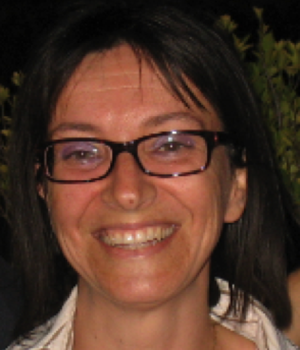
Dr. Stefania Specchia
Politecnico di Torino, Italy
Prof. Stefania Specchia is an Associate Professor of Chemical Plant Design at the Politecnico di Torino, Italy, leading the Gre.En2 (GReen ENergy & ENgineering) Group. The technical expertise areas of Prof. Specchia are Catalytic Reaction Engineering, Heterogeneous Catalysis, Electrochemistry, Electrocatalysis, Fuel Cells (PEMFC and DMFC), Fuel Processors, and Valorization of Wastes.
Click to read more.
Prof. Specchia received her M.Sc. in Chemical Engineering from Politecnico di Torino in 1995. After 7 years working in the industry (Quality Department and R&D Lab for the development of oxidation catalysts), she joined Politecnico di Torino in 2002. In 2012 she was appointed Adjunct Professor at the China Jiliang University. She has been a Lecturer of the courses “Introduction to Industrial Quality Management”, “Hydrogen Technologies and Fuel Cells – Module of Hydrogen Production”, and “Chemical and Electrochemical Reactors – Module of Electrochemical Reactors”. Now, Prof. Specchia is responsible for EU and national research projects, and also various international cooperations. She is the supervisor of 10 grad/ungrad students and post-doc fellowships.Up to now, Prof Specchia has authored/co-author of 73 peer-reviewed publications on international journals with approximately 1000 citations, 5 chapters of international books, one national patent, 142 proceedings of congresses. She attended 49 international congresses (10 of them as invited keynote lecturer). Prof. Specchia is an active member of the American Institute of Chemical Engineering, and the Italian Society of Chemistry.
More...
Hide this content. |

|
Dr. Jinli Qiao
Donghua University, China
Dr. Jinli Qiao is a Professor, Ph.D. supervisor and Disciplines Leader of the College of Environmental Science and Engineering, Donghua Universtiy, China. She received her Ph.D in Electrochemistry from Yamaguchi University, Japan in 2004. After that, she joined the National Institute of Advanced Industrial Science and Technology (AIST), Japan, as a research scientist working on both acidic/alkaline polymer electrolyte membranes and non-noble metal catalysts for PEM fuel cells.
Click to read more.
From 2004 to 2008, as a Principal Investigator, she carried out 7 fuel cell related projects including two NEDO projects of Japan, and starting from 2008 to present, she carried out and has been carried out in total 7 projects funded by Chinese Government. The research areas include PEM fuel cell catalysts / membranes, CO2 electroreduction catalysts, supercapacitors, and metal-air batteries. As the first author and corresponding author, Dr. Qiao has published over 100 research papers in peer-reviewed journals, 38 conference and invited oral presentations, 4 co-authored books/book chapters, and 13 patent publications. Prof. Qiao is a referee for the project assessment of National Natural Science Foundation of China, Scientific Research Foundation of State Education Ministry of China, Foundation of Shanghai Science and Technology Committee, Shanghai “twelfth Five -Year Plan” for clean energy, as well as more than fifteen high-impacting international journals. Dr. Qiao is also an active member of The Electrochemical Society, The Electrochemical Society of Japan, and China Association of Hydrogen Energy.
More...
Hide this content. |

|
Prof. Lei Zhang
National Research Council, Canada
Prof. Lei Zhang is a Research Council Officer at National Research Council of Canada. She received her B.Sc. majoring in Materials Science and Engineering from Wuhan University of Technology in 1990, her first M.Sc. majoring in Materials Chemistry from Wuhan University in 1993 and her second M.Sc. majoring in Physical Chemistry from Simon Fraser University Canada in 2000, respectively.
Click to read more.
After completing her second M.Sc., Ms. Zhang took a position as a research scientist at Membrane Reactor Technologies Inc. Vancouver for three years. Starting in 2004, Ms. Zhang joined NRC as a research council officer, where she undertook various national and industrial projects as a project Manager. Ms. Zhang’s main research interests include PEM fuel cell electrocatalysis, catalyst layer/electrode structure, metal-air batteries, supercapacitors and molecular sieve membrane. Ms. Zhang has co-authored over 100 refereed journal papers, 30 conference and invited presentations, 1 book chapter, 2 books, and 40 industrial technical reports. She holds 3 US patent applications. Ms. Zhang is an adjunct Professor of Federal University of Maranhao, Brazil and Zhengzhou University, China, respectively. She is also the member of the NSERC Industrial R&D Fellowships College of Reviewers, Canada (2012-present), an international advisory member of 7th IUPAC International Conference on Novel materials and their Synthesis (NMS-VII) and an active member of the Electrochemical Society, International Society of Electrochemistry and Canadian Society for Chemistry. Ms. Zhang is now the Director of the Training Division of International Academy of Electrochemical Energy Science (IAOEES).
More...
Hide this content. |

|
Dr. Ru-Shi Liu
National Taiwan University, Taiwan
Dr. Ru-Shi Liu is currently a professor at the Department of Chemistry, National Taiwan University. He received his Bachelor’s degree in Chemistry from Shoochow University (Taiwan) in 1981. He received his Master’s degree in nuclear science from the National Tsing Hua University (Taiwan) in 1983. He obtained two Ph.D. degrees in chemistry – one from National Tsing Hua University in 1990 and one from the University of Cambridge in 1992.
Click to read more.
He worked at Materials Research Laboratories at the Industrial Technology Research Institute from 1983 to 1985. He was an Associate Professor at the Department of Chemistry of National Taiwan University from 1995 to 1999, when he was promoted to a professorship in 1999. His research concerns the field of Materials Chemistry. He is the author or coauthor of more than 450 publications in scientific international journals with a total number of more than 7000 citations. He has also been granted more than 80 patents.
More...
Hide this content. |

|
Dr. Bing-Joe Hwang
National Taiwan University of Science and Technology, Taiwan
Dr. Bing-Joe Hwang is the President of Electrochemical Society of Taiwan, a Fellow of the International Society of Electrochemistry (ISE), and also the Chair Professor at the Department of Chemical Engineering at the National Taiwan University of Science and Technology. His research work has spanned a wide range of subjects from electrochemistry to spectroscopy, interfacial phenomena, nano-materials science and theoretical chemistry.
Click to read more.
His work has led to a better understanding of reaction mechanisms on nanoparticles and electrode’s surface and to an improved ability to predict the properties of potential new materials for both Li-ion batteries and fuel cells. He has published more than 280 scientific papers in renowned international journals with a total number of more than 5000 citations. He is a three time recipient of the outstanding research award from the National Science Council of Taiwan. Due to his excellent achievements in teaching and research and his substantial contribution to local industries, he has won: the 54th National Academic Award (2010) in Engineering and Applied Science given by the Ministry of Education of Taiwan, the 8th Y. Z. Hsu Scientific Chair Professor Award (2010) by Far Eastern Y. Z. Hsu Science and Technology Memorial Foundation, and the TECO award (2011) in Chemical Engineering and Materials Science awarded by TECO Technology Foundation. He was appointed as a foreign corresponding member of the Academy of Sciences of Lisbon at 2011.
More...
Hide this content. |

|
Dr. Zhigang Qi
Wuhan Troowin Power System Technology Co., China
Dr. Zhigang Qi currently is the Chief Technology Officer and Vice-President of Wuhan Troowin Power System Technology Co., Ltd. Dr. Qi received his B.Sc. in chemistry and M.Sc. in analytical chemistry from the University of Science and Technology Beijing (China) in 1985 and 1988, respectively. He earned another M.Sc. in electrochemistry from Memorial University of Newfoundland (Canada) in 1993, and a Ph.D. in polymer and materials chemistry from McGill University (Canada) in 1996.
Click to read more.
After doing post-doctoral research for a year and a half, Dr. Qi joined H Power Corp. (U.S.) as a senior staff scientist and the supervisor of the electrochemistry lab. In 2003, he moved to Plug Power (U.S.) as the manager of the analytical and fundamentals group, and was subsequently appointed as a corporate fellow in late 2004. He joined MTI Micro Fuel Cells (U.S.) as a corporate fellow in November 2007 leading the effort to enhance the power density and durability of direct methanol fuel cells until he moved to Wuhan Intepower Co., Ltd. (China) in 2009 as a vice president overseeing R&D, domestic and international collaboration in the area of renewable energy. He was appointed as the chief executive officer of Wuhan Intepower Fuel Cells Co., Ltd. in 2013. Dr. Qi has broad experience in the areas of proton exchange membrane fuel cells, direct methanol fuel cells, and phosphoric acid fuel cells. He authored CRC book “Proton Exchange Membrane Fuel Cells”, published 56 articles, 6 book chapters, has 9 US patents, and 7 Chinese patents. He is a technical advisor of the Knowledge Foundation (U.S.), a member of the China Fuel Cell and Flow Cell Standardization Committee, a technical committee member of the Fuel Cell Key Laboratory in Hubei Province, the chief scientist and manager of two key projects of the 863 Plan (China) with a total funding of $14 million, and was an editorial board member of the Journal of Power Sources (EU).
More...
Hide this content. |

|
Dr. Shuhui Sun
Institut National de la Recherche Scientifique (INRS), Canada
Dr. Shuhui Sun is the review editor of Frontiers in Energy Storage, the editor board member of Journal of Nanotechnology, and ISRN Nanomaterials, the Director of Publication Division of The International Academy of Electrochemical Energy Science (IAOEES), the active member of ISE, ECS, CSC, CQMF, Plasma Quebec, and UNESCO Chair MATECSS, as well as a Full Member of the Sigma Xi Society.
Click to read more.
Dr. Sun received his Ph.D from Chinese Academy of Sciences in 2004, and continued his research at INRS and the University of Western Ontario, Canada, where he was responsible for developing novel nanomaterials for clean energy in NSERC-GM sponsored Canadian Research Chair projects. Dr. Sun is now an Assistant Professor at the Institut National de la Recherche Scientifique (INRS), center for Energy, Materials, and Telecommunications, University of Quebec, Canada. His current research interests focus on the development of multi-functional nanomaterials for electrochemical energy and environmental applications. His major expertise areas are the controlled synthesis of various nanomaterials, including graphene, doped-graphene, carbon nanotubes, metal and metal oxide nanostructures, and nanocomposites, as well as their applications in H2/O2 fuel cells, methanol fuel cells, formic acid fuel cells, supercapacitors, and waste water treatment. Dr. Sun has published many scientific papers in the world leading journals, such as Angew, Chem. Int. Ed., Scientific Reports, Advanced Materials, etc. He has received a series of prestigious academic awards, such as Quebec Merit Scholarship, Alexander Graham Bell Canada Fellowship, ISE Travel Award for Young Electrochemists, and Governor General's Gold Medal (Canada).
More...
Hide this content. |

|
Dr. Meilin Liu
Georgia Institute of Technology, United States
Dr. Meilin Liu is a Regents' Professor and Associate Chair of the School of Materials Science and Engineering and Co-Director of the Center for Innovative Fuel Cell and Battery Technologies at Georgia Institute of Technology, Atlanta, Georgia. He also serves as the Associate Director of the HeteroFoaM Center, a DoE Energy Frontiers Research Center at USC. He received his MS and PhD from University of California at Berkeley.
Click to read more.
His research interests include design, fabrication, in situ characterization, and modeling of membranes, thin films, coatings, porous electrodes, and devices for electrochemical energy storage and conversion, aiming at achieving rational design of novel materials and structures with unique functionalities. Dr. Liu holds ~22 U.S. patents, published ~270 refereed articles with morthan 14000 citstions, co-edited 7 proceedings volumes, co-organized 11 international symposia or workshops, and delivered more than ~150 invited lectures around the world. Dr. Liu is an elected fellow of the American Ceramic Society (ACerS) and the Electrochemical Society (ECS). He was the winner of many professional awards, including Ross Coffin Purdy Award (ACerS, 2010) and National Young Investigator Award (NSF, 1993-98).
More...
Hide this content. |

|
Dr. Jian Li
Huazhong University of Science and Technology, China
Dr. Jian Li is a Professor at Centre for Fuel Cell Innovation, School of Materials Science and Engineering, Huazhong University of Science and Technology. Dr. Li obtained his first Ph.D in Physical Metallurgy from the Central Iron and Steel Research Institute (Beijing), and his second Ph.D in Ceramic Engineering from University of Illinois at Urbana-Champaign n 1990. He did his postdoctoral fellow studying shape memory materials in USA in Prof. C. M. Wayman’s group.
Click to read more.
In 1995, he joined Prof. R. D. James of University of Minnesota at Twin Cities as a postdoctoral fellow doing research on magnetic shape memory materials. From 1996 to 2001, he worked as a Material Engineer/Senior Material Engineer at FuelCell Energy Inc., developing materials and processes for molten carbonate fuel cells. From 2001 to 2004, as a senior scientist, he worked for Versa Power Systems, Inc. (then Global Thermoelectric, Inc.) in Canada, working on interconnect and contact development for solid oxide fuel cells (SOFC). Since 2004, he has been a Professor at the Huazhong University of Science and Technology, continuing his research on SOFCs, high-strength steels for automobiles and Li-air battery. He has authored over 100 scientific publications, received 6 US patents and 6 Chinese patents.
More...
Hide this content. |

|
Dr. Pang-Chieh (Jay) Sui
University of Victoria, Canada
Dr. Pang-Chieh (Jay) Sui is the Director of Conference Division of the International Academy of Electrochemical Energy Science (IAOEES). Dr Sui is a Senior Research Engineer in the Institute for Integrated Energy Systems (IESVic) and Manager of the Energy Systems Transport Phenomena (ESTP) Lab of the University of Victoria. Dr. Sui received his Masters and Ph.D. degrees in Mechanical Engineering from The University of Iowa, Iowa City, U.S.A, in 1992 and 1997 respectively.
Click to read more.
He then worked as a Research Scientist in the National Driving Simulator as well as Adjunct Assistant Professor of Mechanical Engineering Department at University of Iowa during 1997-2003. He joined IESVic in 2003. Dr. Sui’s research interests include Polymer Electrolyte Membrane Fuel Cells (PEMFCs), Combustion and Flame, Transport Phenomena at Near-critical States, Multiphysics Simulations, Laser Diagnostics for Reacting Flows. Specific topics of his research include computer-aided design and simulation tools for PEMFC, multi-scale simulation methods, turbulent flows in stack headers, characterisation and reconstruction of porous media in fuel cells, and so on. His current work focuses on the investigation of coupled chemical and mechanical degradation in PEMFCs. He has been involved in numerous collaborative, interdisciplinary activities with research organizations in the U.S., Canada, and China & Taiwan. He also actively participates in technical conferences and constantly serves as reviewer for journal papers. He has helped in organizing an array of international conferences and workshops, including ISTP-20, Canada-China Clean Energy Conference, Cross-strait Clean Energy Conference. Outside of his work, Dr. Sui is an avid photographer and gardener. He enjoys traveling, cooking, music and wood working.
More...
Hide this content. |

|
Dr. David Mitlin
University of Alberta, Canada
Dr. David Mitlin is a Professor in the Department of Chemical and Materials Engineering at the University of Alberta and a Principal Research Officer at the National Institute for Nanotechnology NRC. Dr. Mitlin's core expertise lies in synthesis - microstructure - properties relations of nanocomposites and thin films, and in materials characterization via TEM. His current activity is focused on the development of advanced nanomaterials for a variety of energy related applications such as ORR electrodes, electrochemical...
Click to read more.
supercapacitors, lithium ion batteries, and metal hydrides. Recently Dr. Mitlin was a recipient of the Petro-Canada Young Innovator Award for the hydrogen storage research. Dr. Mitlin has published over 80 peer-reviewed journal articles, holds a U.S. patent, is a regular reviewer for a wide range of scientific journals including Nature Materials and JACS, is an Editor for the Journal of Materials Science, and serves on the Board of Review for Metallurgical and Materials Transactions. Prior to joining the University of Alberta in 2004, Dr. Mitlin was at Los Alamos National Laboratory (USA), where he was awarded a Directors Funded Postdoctoral Fellowship. From 2000 to 2002, Dr. Mitlin worked as an Integration Engineer at the IBM Semiconductor Research and Development Center, in Hopewell Junction NY. Dr. Mitlin received his Doctorate from U.C. Berkeley in 2000.
More...
Hide this content. |

|
Dr. Yun Hang Hu
Michigan Technological University
Dr. Yun Hang Hu is Charles and Carroll McArthur Endowed Chair Professor at Michigan Technological University. Before joining Michigan Tech, he was a Senior Staff Engineer at the ExxonMobil Research and Engineering Company and a Research Professor of Chemical and Biological Engineering at the State University of New York at Buffalo. His main research interests range from nanomaterials, solar cells, capacitors, fuel cells, CO2 conversion,...
Click to read more.
heterogeneous catalysis for clean fuels, photocatalysis for hydrogen production, to hydrogen storage materials. He has published more than 110 peer reviewed papers in reputed journals with about 4000 citations, and organized more than 20 international symposia. He is an editor for 3 books and an editorial board member for 9 journals, including Scientific Reports (a Nature Group journal), Journal of Materials Chemistry A (a RSC journal), International Journal of Energy Research (a WILEY-VCH journal), and Catalysis Today (an Elsevier journal). He was a program chair for the Fuel Chemistry Division of the American Chemical Society (ACS) in 2012 and for the Energy and Fuel Division in 2012 and 2013. He is a chair-elect for ACS Energy and Fuels Division and a fellow of Royal Society of Chemistry (RSC).
More...
Hide this content. |

|
Dr. Tatsumi Ishihara
Kyushu University, Japan
Dr. Tatsumi Ishihara is currently a Professor in Kyushu University, Japan. Dr. Ishihara received Dr. Eng. degree in 1989 from Kyushu University. He joined the Graduate School of Engineering Science in Kyushu University in 1986, and in 1988, he moved to the Faculty of Engineering in Oita University as an associate professor. In 2003, he moved to Faculty of Engineering in Kyushu University as full professor. Main research interests are covered oxide ion conductor and its application for fuel cells and catalyst chemistry.
Click to read more.
Dr. Ishihara has achieved many recognitions such as Award from Japan Chemical Society, Nikkei BP Award, Award from Ministry of Education, Culture, Sports, Science, and Technology, Seiyama Award from Japan Chemical Sensor Society, Ichimura Research Award from New Technology Development Foundation, Somiya Award from IUMRS, Society Technical Award from Catalyst Society of Japan, and Academic Award from Ceramic Society of Japan. Dr. Ichimura has published 444 original scientific papers, 47 books/book chapters, as well as 93 patents.
More...
Hide this content. |

|
Dr. Yushan Yan
University of Delaware, United States
Dr. Yushan Yan joined the University of Delaware as Distinguished Engineering Professor in 2011 after serving on the faculty of the University of California at Riverside (UCR) for 13 years. He received his B.S. in Chemical Physics from the University of Science and Technology of China in 1988, and Ph.D. in Chemical Engineering from the California Institute of Technology in 1997. He studied heterogeneous catalysis at the Dalian Institute of Chemical Physics of the Chinese Academy of Sciences from 1988 to 1992.
Click to read more.
After his PhD, he worked for AlliedSignal Inc. as Senior Staff Engineer and Project Leader for two years and then began his academic career at UCR as Assistant Professor in 1998. He was promoted to Associate Professor in 2002 and Professor in 2005. He was appointed Department Chair in 2008. He was honored as one of the 5 inaugural University Scholars at UCR in 2006. In 2010, he was given the title of University of California Presidential Chair. He is a Fellow of the American Association for the Advancement of Science. He was recognized by the International Zeolite Association with the Donald Breck Award in 2010 for his zeolite thin film research. He was one of 37 awardees in the US Department of Energy’s ARPA-E OPEN 2009 (1st open call for proposals) for his hydroxide exchange membrane fuel cell technology and one of 66 awardees in OPEN 2012 (2nd open call for proposals) for his redox flow battery concept. He has been an inventor on a number of issued or pending patents, some of which were licensed to form startup companies (NanoH2O, Full Cycle Energy, Zeolite Solution Materials, and OH-Energy). He has published 156 journal articles that are widely cited in the scientific community (h-index = 51, +8,000 citations) and his research has been extensively covered by the media.
More...
Hide this content. |

|
Dr. Zhaoping Liu
Chinese Academy of Sciences, China
Dr. Zhaoping Liu received his PhD in inorganic chemistry from University of Science & Technology of China (USTC) in 2004. He then worked as postdoctoral researcher in National Institute for Material Science (NIMS), Japan, and State University of New York (SUNY) at Binghamton, between 2004 and 2008. Since Sep. 2008 , he has worked in Ningbo Institute of Materials Technology & Engineering (NIMTE), Chinese Academy of Sciences. He current is the Director and Professor of Advanced Li-ion Battery Engineering Lab.
Click to read more.
His main research interests include Li-ion batteries and graphene. He has published over 70 peer-reviewed papers with total citing of over 3,000, and received more than 70 patents.
More...
Hide this content. |

|
Dr. Yuyu Liu
Tohoku University, Japan
Dr. Yuyu Liu is an Associate Professor at the Graduate School of Environmental Studies, Tohoku University, Japan. Dr. Liu received his Ph.D. in Environmetal Engineering from Yamaguchi University, Japan in 2003. He then worked at Kyushu Environmental Evaluation Association, Osaka Institute of Technology, Tokyo University of Agriculture and Technology, and Yokohama National University as Postdoctoral and Research Fellow.
Click to read more.
Dr. Liu has more than 10 years of experience in the environment science and technology, particularly in the areas of air quality monitoring, water and soil research, and their assocoated instrument development. Recently, his research interest is moving to the electrochemical reduction of CO2 to low-carbon fuels. He is also the members of Japan Society on Water Environment and Japan Society of Material Cycles and Waste Management.
More...
Hide this content. |

|
Dr. Huamin Zhang
Chinese Academy of Sciences, China
Dr. Huamin Zhang currently is a Professor and Header of energy storage division at the Dalian Institute of Chemical Physics (DICP), Chinese Academy of Science; He is also CTO of Dalian Rongke Power Co., Ltd, Chief Scientist of 973 National Project on Flow Battery, a Director of the state key lab of flow battery for energy storage and National Technical Committee on flow battery standardization. He obtained his bachelor degree from department of chemistry, Shandong University in 1982, he received his MS and PhD degree from Kyushu University in 1985 and 1988...
Click to read more.
respectively, in Japan. After several years’ working at SUD-CHEMIE Japan, Osaka Gas Inc., Japan, he joined in DICP as a full professor in 2000. His research interests include the topic of energy and energy storage, e.g. fuel cells, flow batteries and batteries with high specific energy density. Dr. Zhang has co-authored more than 260 research papers published in refereed journals and more than 200 patents. He received various awards such as Japan Chemical Society Academic Award, Four ministries Outstanding Scientific and Technological Achievements Awards Scientific and Technological Progress Award in Dallian and Provincial S&T Progress Award for his achievement in research.
More...
Hide this content. |

|
Dr. Chang Ming Li
Southwest University, China
Dr. Chang Ming Li is the China National Talent 1000 Professor, Dean of Faculty of Materials and Energy in Southwest University of China. In his professional career, he was Motorola Distinguished Technical Staff, senior scientific manager and Science Advisory Board Associate; Professor, Director of Centre for Advanced Bionanosystems and Head of Bioengineering Division in Nanyang Technological University, Singapore. His research focuses on functional nanomaterials...
Click to read more.
and electrochemistry in nanoscales, in particular in advance technologies of electrochemical sensors/lab-on-a chip systems and green energies (batteries, solar cells, hydrogen evolution/storage, fuel cells and supercapacitors). He has published more than 400 peer-reviewed journal papers including Nature Mater, JACS, Phys Rev Lett, Angew Chem, Nanoletters, ACS Nano, EES etc. with an IF of 50 and more than 10,000 citations, 8 book chapters, and holds more than 124 patents. He has received a number of prestigious awards such as US Motorola Master Innovator Award, Singapore Nanyang Innovation and Research Award, China National Talent 1000 Award, China Overseas Innovation Talent Award and Australia National University Craig Visiting Professor. He is the Fellow of American Institute of Medical and Biological Engineering, Fellow of Royal Society of Chemistry, Editorial member of RSC Advances and Member of Advisory Board of Nanoscale.
More...
Hide this content. |

|
Dr. Lijun Wan
Chinese Academy of Sciences, China
Dr. Lijun Wan is a Research Professor of the Institute of Chemistry of Chinese Academy of Sciences (CAS). Dr. Wan obtained his B.Sc. degree in 1992 from Dalian University of Science and Technology. In 1996, he received his PhD degree in Northeast University of Japan. After that, He worked as the researcher of Japan Science and Technology Agency, the associated professor and visiting professor of Northeast University and Hokkaido University of Japan, respectively.
Click to read more.
In 1998, Dr. Wan returned to the Institute of Chemistry of CAS as the "Hundred Talents Project" of CAS. From 2004 to 2012, he served as the Director of Institute of Chemistry of CAS. In Nov. 2012, he was elected as the Alternate member of the eighteenth CPC Central Committee. In Nov. 2009, he was elected as the Academician of Chinese Academy of Science (中科院院士). In Oct. 2010, he was elected as the academician of TWAS. Dr. Wan currently serves as the Director of the Center of Molecular Science of CAS, Director of the Key Laboratory of nano-structure and nano-technology of CAS, and Director of State Key Laboratory of Beijing Molecular Science. Dr. Wan has long engaged in STM, electrochemistry and surface science cross-disciplinary research. He combined the experiment, instrumental transformation and theoretical research and developed the research on electrochemical reaction, molecular self-assembly and regulation. Prof. Wan proposed the regulation of surfacial molecule absorption and assembly based on different interactions, and applied them on the research of surfacial nano-patterns, molecular self-assembly structure transformation and molecular/atomic migration. Meanwhile, Prof. Wan explored the cross-disciplinary research area of electro-chemistry and nano-science, and dedicated to the application research of nano-materials in energy and environmental protection. Dr. Wan has published more than 260 research papers in journals like Acc. Chem. Res., PNAS, Angew. Chem. Int. Ed., JACS, etc. as well as a monograph of "Electrochemical scanning tunneling microscopy and application". He was awarded the Outstanding Youth Scholar Funding of NSFC and served as the editor board member of Acc. Chem. Res., JACS, Adv. Mater., Chem. Mater., Chem. Commun., PCP and etc. He was awarded the TWAS Prize in Chemistry, the 2nd Prize of National Natural Science Award, Beijing 1st Prize of Science and Technology, 1st Prize of Science and Technology of Chinese Analysis Association and CCS-BASF Youth Innovation Award and etc. He was also awarded the Labor Medal of the central state organs as well as National Advanced Worker. He was elected as the Fellow of RSC, vice chairman of CCS, Director of CES, representatives of Pacific Rim International Chemical Congress and organizing committee of SPM series of international conferences.
More...
Hide this content. |

|
Dr. Wei Xing
Chinese Academy of Sciences, China
Dr. Wei Xing is a professor in Changchun Institute of Applied Chemistry (CIAC), Chinese Academy of Sciences. He is Director of Laboratory of Advanced Power Sources in CIAC. He received B.Sc in 1987 and Ph.D in 1995 from Zhejiang University and Changchun Institute of Applied Chemistry, respectively. He spent three years in Hong Kong Productivity Council as Scientific Consultant since 1996. He joined Changchun Institute of Applied Chemistry as full professor of chemistry...
Click to read more.
in 2000, and visited Technical University of Denmark, the National Research Council of Canada, and Kansai Science and Technology Research Center of Japan as visiting scholar. He is a member of Chinese Chemical Society, the International Electrochemical Society, Chinese Solid State Ion Association, Chemical Industry and Engineering Society of China. His research is mainly concentrated on the R&D of fuel cell technologies including proton exchange membrane and direct liquid fuel cells. He has coauthored over 200 articles with over 2000 citations in international journals, which are related to electrochemistry, chemical power sources and fuel cells, and published several books on fuel cells. He has been in charge of and took part in National and Provincial programs, including National Natural Science Foundation of China, National High Technology Research and Development Program, the National Key Basic Research and Development Program, and so on.
More...
Hide this content. |

|
Dr. Shijun Liao
South China University of Technology, China
Dr. Shijun Liao is a Professor at South China University of Technology, Director of the Key Laboratory of Fuel Cell Technology of Guangdong Province, and associate editor of Journal of Nanomaterials, He received his Ph. D degree from South China University of Technology, after that he has worked at this university till now. Dr. Liao’s research works mainly focused on the fuel cell technology and engineering, electrocatalysis, and nanomaterials for fuel cell and Li-ion battery application.
Click to read more.
He authored over 200 peer-reviewed papers published on JACS, Chem. Comm., J. Catal., Carbon, Angew. Chemie, J. Mater. Chem., etc, 30 patents application and 10 issued patents, and a book chapter. He has received six awards issued by Chinese Education Ministry and Guangdong Province for his excellent researches.
More...
Hide this content. |

|
Dr. Hua Kun Liu
University of Wollongong, Australia
Dr. Hua Kun Liu is Distingiushed Professor and a co-ordinator of energy materials research program of the Institute for Superconducting and Electronic Materials (ISEM) at Australian Institute of Innovative Materials, University of Wollongong. She was elected as a Fellow of the Australian Academy of Technological Science and Engineering in 2013. She was continuously awarded the Australian Professorial Fellowships from Australian Research Council in the last 17 years (1994-1998, 1999-2003, 2003-2005 and 2006-2010).
Click to read more.
She is a key researcher for Auto CRC 2020 program on energy storage (2012-2017) and a Chief Investigator for ARC Centre of Excellence on electromaterials (2003-2013). She was a CI of CSIRO Flagship on Australian National Hydrogen Alliance and has collaborated with 11 Australian universities (2007-2009). She received the University of Wollongong Vice-Chancellor’s Award for Research Excellence Senior Researcher in 2013. She has supervised 50 Ph.D to completion and 30 postdoctoral and visiting fellows. Her research has been focused on clean energy materials, the materials science and engineering, and electrochemistry and applications. She has published 2 Books, 10 review papers, more than 500 refereed journal papers with total citations > 16000, H-index: 58 (Web of Science), 1 USA patent and 10 Australian Provisional Patents.
More...
Hide this content. |

|
Dr. Min-Fang Han
Tsinghua University, China
Dr. Min-Fang Han now is a professor in Tsinghua University, also the professor at China University of Mining & Technology, Beijing (CUMTB), and the Director of Union Research Center of Fuel Cell in CUMTB. Dr. Han is the Distinguished Professor of Chang Jiang Scholars Program, Principal Scientist of National 973 SOFC Program, and the Academic Leader of Beijing Municipal Key Discipline of Clear Energy.
Click to read more.
Dr. Han was the Chairman of Asian SOFC Symposium in 2012. Dr. Han was the woman pace-setter, obtained her Talents Awards for 3 times in Jiangsu Province (2011), Beijing (2007) and Ministry of Education(2006), her Science and Technology Awards for 3 times in Beijing (2011) and Ministry of Education(2009 and 2007), and her Teaching Awards for 2 times in 2008 and 2004, respectively. She has edited 3 books and translated 1 book; applied 24 Chinese invention patents, 16 authorized; published 160 Academic papers and 60 presentations. Dr. Han Obtained her Bachelor degree of Engineering from Tsinghua University in 1990, Master and Doctor degrees of Engineering from CUMTB in 1993, and 2002, respectively. She was the Visiting Professor in Swiss Federal Institute of Technology (ETH Zurich, 2008) and the Visiting Scholar in Technical University of Dresden Germany (2001). Now, her research areas relate to the new energy and new material technology, including : Solid Oxide Fuel Cell materials and power system, oxygen permeation membrane (OPM), hydrogen refining from coal relative gas, ceramic materials, Geopolymer, solid waste utilization such as fly ash, red mud and so on, and CO2 utilization and recycle.
More...
Hide this content. |

|
Dr. Shizhang Qiao
University of Adelaide, Australia
Dr. Shizhang Qiao joined the School of Chemical Engineering of the University of Adelaide (UoA) in March 2012 as a professor (the inaugural Chair of Nanotechnology). His research expertise is in nanomaterials and nanoporous materials for bioseparation, drug/gene/RNA delivery and new energy technologies. He has co-authored more than 185 papers in refereed journals, including Nature, Nature Communications, Angew Chem Int Ed, J. Am. Chem. Soc, Advanced Materials with him as a corresponding or joint corresponding author (over 7000 citation times, h-index: 44). He has filed three patents on novel nanomaterials...
Click to read more.
and attracted more than 6.5 million dollars in research grants from industrial partners and Australian Research Concile (ARC). In recognition of his achievements in research, he was honoured with a prestigious ARC Discovery Outstanding Researcher Award (DORA, 2013), a Emerging Researcher Award (2013, ENFL Division of the American Chemical Society) and a UQ Foundation Research Excellence Award (2008). He has also been awarded an ARC ARF Fellowship (relinquished), an ARC APD Fellowship and an inaugural UQ Mid-Career Research Fellowship. Dr Qiao is currently an Honorary Professor at The University of Queensland and is appointed to ARC College of Experts, an Associate Editor of Journal of Materials Chemistry A, and A member of Editorial Board of ChemBioEng Review (Wiley).
More...
Hide this content. |
|
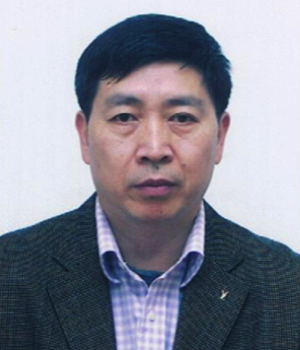
Dr. Haijiang Wang
National Research Council, Canada
Dr. Haijiang Wang is a senior research officer in the National Research Council of Canada. His research covers PEM fuel cell, direct methanol fuel cell, metal-air battery, microbial fuel cell, water electrolysis and flow battery. Dr. Wang received his Ph.D. in electrochemistry from the University of Copenhagen, Denmark, in 1993. He then joined Dr. Vernon Parker’s research group at Utah State University as a postdoctoral researcher to study electrochemically generated anion and cation radicals. In 1997 he began working with Natural Resources Canada...
Click to read more.
as a research scientist to carry out research on fuel cell technology. In 1999 he joined Ballard Power Systems as a senior research scientist to continue his investigations. After spending five years with Ballard Power Systems, he joined NRC-IFCI in 2004. To date, he has published 160 journal papers, three books, forty industrial reports, and thirty conference papers or presentations, and has been issued three patents.
More...
Hide this content. |

|
Dr. Tomokazu Matsue
Tohoku University, Japan
Dr. Tomokazu Matsue is a Professor and a Principal Investigator at WPI-Advanced Institute for Materials Research (WPI-AIMR), Tohoku University. Currently, he serves as the President of the Electrochemical Society of Japan (ECSJ) and an editor of Electrochimica Acta (Society journal of the International Society of Electrochemistry (ISE). He received Ph. D from Tohoku University in 1981. After working as a Professor at the Graduate School of Engineering, Tohoku University,...
Click to read more.
he moved to the Graduate School of Environmental Studies for its foundation in 2003. In 2010, he joined WPI-AIMR. His research interests are in micro/nano-biosensing devices and systems, high-resolution electrochemical imaging of bio- and energy-related materials. He has published more than 300 original papers and more than 100 reviews and books.
More...
Hide this content. |

|
Dr. Feng-Yuan Zhang
University of Tennessee, United States
Dr. Feng-Yuan Zhang is an Associate Professor in the Department of Mechanical, Aerospace and Biomedical Engineering at the University of Tennessee and is the director of NanoHelp group. Prior to that, he did research at University of Delaware, Penn State University, the University of California, Los Angeles, and Stanford University. He received his B. S. and M.S. from Nanjing University of Aeronautics and Astronautics, and his Ph. D. from Nagoya University in 1999...
Click to read more.
Dr. Zhang’s research interests lie in thermal-fluid sciences, micro-/nano- technology, and advanced spectroscopies and diagnostics. The goal of his research group is to develop high-efficiency, low-cost and sustainable energy and propulsion devices, such as fuel cells, electrolyzers, batteries, direct combustion engines, and electrical thrusters. The research includes: Micro-/nano-scale fluidics, transport, heat transfer, and combustion; advanced manufacturing and MEMS/NEMS; novel multifunctional materials; electrochemical energy storage and conversions; laser tomography, optical, x-ray and electron spectroscopies. Dr. Zhang has authored/co-authored 3 book chapters and over 60 other publications, and has given 10+ invited talk and plenary lectures worldwide.
More...
Hide this content. |

|
Dr. Mu Pan
Wuhan University of Technology, China
Dr. Mu Pan is a Chair Professor at Wuhan University of Technology, Director of Hubei Fuel Cell Key Laboratory, Vice-Director of State Key Laboratory of Advanced Technology for Materials Synthesis and Processing. Dr. Pan is the Vice-Chairman of China Association for Hydrogen Energy, Vice-Chairman of National Committee on fuel cell & Battery of standardization Administration of China, and Advisor committee members of China National 863 (HTRDP) Program for the field of advanced energy technologies. Dr. Pan obtained his B.E and M.E...
Click to read more.
from Shanghai Jiao Tong University during 1981-1988, and his Ph.D from Wuhan University of Technology in 1999. , 1994-1999. Dr. Pan has conducted more than 10 research projects as project principal investigator, such as National Natural Science Foundation of China, National Basic Research Program of China and National High Technology R&D Plan Program. etc. He has many publications in peer-reviewed journals in the areas of energy materials and engineering, particularly in PEM fuel cell science and technology.
More...
Hide this content. |

|
Dr. Kuei-Hsien Chen
National Taiwan University, Taiwan
Dr. Kuei-Hsien Chen is a Research Fellow and Deputy Director of Institute of Atomic and Molecular Sciences, Academia Sinica, he is also an Adjunct Research Fellow, Center for Condensed Matter Sciences, National Taiwan University. Dr. Chen obtained his B.S. of Electrical Engineering from National Taiwan University in 1981, his M.S. of Applied Physics from Columbia University in 1984, and his Ph.D. of Applied Science from Harvard University in 1989, respectively...
Click to read more.
Dr. Chen has achieved many awards including Ho Chin Tui Outstanding Honorary Award in Materials Science (2012); Oustanding Scholar Awards of the Foundation for the Advancement of Outstanding Scholarship (2008-2013); First Prize in Science as Art Contest, MRS-2008, Boston (2008); First Prize Award in the Art Contest of the Annual Meeting of American Vacuum Society, Seattle (2007); Outstanding Research Award, National Science Council, Taiwan (2005); Outstanding Publication Award, IAMS, Academia Sinica (2004); Young Scholar Research Award, Academia Sinica (2000); Chemistry Lectureship, Damkang University (1999); and National Science Council Research Award (1994-2000). Dr. Chen serves as the editorial member/reviewer for many journals including Advanced Materials, Nanoletters, Nanoscale, Chem. Phys. Lett., J. Appl. Phys., Appl. Phys. Lett., Materials Chem. & Phys., and Applied Phys. Dr. Chen has published 355 Referred papers, 76 International conference Invited/Keynote/Plenary talks, 7 Book Chapters, 12 patents, with WOS h-index of 45.
More...
Hide this content. |

|
Dr. Nicolas Alonso-Vante
University of Poitiers, France
Dr. Nicolas Alonso-Vante is a Professor in the Department of Chemistry at the University of Poitiers. Dr. Alonso-Vante obtained his degrees of Docteur Troisième Cycle (1981) and Doctorat d’Etat (1984) from the University of Strasbourg, respectively. Under the auspices of the Alexander von Humboldt foundation he was awarded a two years Post-Doc fellowship (1985-1986) at the Hahn-Meitner-Institut-Berlin (now Helmholtz-Zentrum Berlin), where he further worked as a senior scientist in the department of solar energy until August 1997.
Click to read more.
Over more than two decades he has developed materials in the nanodivided scale based on transition metal and chalcogenides in metallic and semiconducting form in Germany and France. Using facile chemical routes he has pioneered the use of non-platinum and non-precious metal catalysts center chalcogenides in order to understand the complex process of the oxygen reduction reaction process, an important technological reaction in low temperature fuel cells. Other interest of such materials in combination with light harvesting are devoted to split water into hydrogen and oxygen, and photocatalysis. Dr. Alonso-Vante’s other main research interests are (Photo) electrochemistry and (Photo) electrocatalysis of novel materials using various ex situ and in situ techniques, fuel generation, interfacial characterization and surface analytical techniques. He is the author of over 180 publications, book chapters, editor of a two-volume e-book of electrochemistry in Spanish and holds 2 US, 2 German, and 2 French patents; his work has been widely cited. He has received the awards of the National Polytechnic Institute-Mexico as a R&D distinguished graduate, and of the Mexican Council of Technology SNI-III recognition as a Mexican researcher working outside Mexico. He is also a member of the International Society of Electrochemistry, the Electrochemical Society, and the Bunsengesellschaft für Physikalische Chemie.
More...
Hide this content. |

|
Dr. Lin Yang
Henan Normal University, China
Dr. Lin Yang is the Vice-President of Henan Normal University from 2008 to present, and an Associate Director of the Key Laboratory of Green Chemical Media and Reactions, Ministry of Education. Dr. Yang is also a professor, and Core-competency Leader at Henan Normal University. He received his Ph.D of Physical Chemistry from Lanzhou Institute of Chemical Physics of Chinese Academy of Sciences. He was a Visiting Scholar at TU Braunschweig during 1989-1991, and the University of Halle during 1994-1995, respectively.
Click to read more.
The technical expertise areas of Dr. Yang are new materials for electrochemical energy sources and inorganic/organic hybrid nanomaterials. Up to now, he has published over 150 scientific papers on Angew. Chem. Int. Ed.,Adv. Mater.,Chem. Commun. J. Phy. Chem. etc.. He has received a number of honors and awards, such as the First Class Awards for Progress in Science & Technology of Henan Province, the Academic Leader of Henan Province, and so on.
More...
Hide this content. |

|
Dr. Xianguo Li
University of Waterloo, Canada
Dr. Xianguo Li is a Professor in the Department of Mechanical and Mechatronics Engineering at the University of Waterloo, the Editor-in-Chief of the International Journal of Green Energy, and a Fellow of the Engineering Institute of Canada. Dr. Li has a wide range of research interests, including fuel cells, liquid atomization and sprays, and energy systems. His research is both fundamental and applied, involving technologies used today and anticipated for the future. Dr. Li has published extensively, including over 100 journal articles and a book...
Click to read more.
entitled “Principals of Fuel Cells”. He has also edited a book entitled “Progress in Green Energy”. His published articles have received extensive citations, including some rated within the top 1% in the field. One of his published articles received the best paper award at an international conference. Dr. Li has contributed actively to the progress of the engineering profession and society. He established the International Green Energy Conference series, and launched the annual review series Progress in Green Energy. Dr. Li is currently serving on the editorial board of six international scientific / technical journals, a book series on fuel cells and an encyclopedia on energy engineering and technology. Dr. Li also serves as the division chair for the Advanced Energy Systems technical division within the Canadian Society for Mechanical Engineering, and on various committees established by different levels of government.
More...
Hide this content. |

|
Dr. Masayuki Morita
Yamaguchi University, Japan
Dr. Masayuki Morita is currently a Professor in Graduate School of Science and Engineering at Yamaguchi University, Japan. Dr. Morita received his Dr. degree from Osaka University in 1980. He joined Faculty of Engineering at Yamaguchi University in 1980 as an Research Associate. He was promoted to Associate Professor in 1988, and to full Professor in 1996. Dr. Morita has been an active member of several International and Domestic Societies: Royal Society of Chemistry (RSC), International Society of Electrochemistry (ISE), Electrochemical Society...
Click to read more.
(ECS), Chemical Society of Japan (CSJ), Electrochemical Society of Japan (ECSJ), Surface Finishing Society of Japan (SFSJ), etc. His research interests are material designing and characterization in 1) Rechargeable batteries including lithium-ion, sodium ion and magnesium batteries, 2) Electrochemical capacitors including electric double-layer and pseudo capacitors, and 3) Electrocatalysts for direct alcohol fuel cells. Dr. Morita has so far published more than 250 original papers, 30 review/commentary papers, and 30 books/book chapters, in these research areas.
More...
Hide this content. |

|
Dr. Tzyy-Lung Leon Yu
Yuan Ze University, Taiwan
Dr. Tzyy-Lung Leon Yu is a Professor in Chemical Engineering & Materials Science at Yuan Ze University. Dr. Yu obtained his B.S. degree in Chemistry from National Tsing-Hua University (Taiwan) in 1971, and Ph.D. degree in Macromolecular Science from Case Western Reserve University (USA) in 1988, respectively. He was an Associate Professor from 1989 till 1993, then Professor at Yuan Ze University from 1993 until now. He joined Yuan Ze Fuel Cell Center research group since 2001.
Click to read more.
His research interests are: (1) Polymer light scattering, viscoelasticty, and morphology; (2) Low temperature & high temperature proton exchange membrane fuel cells and direct methanol fuel cells. He is the author and co-author of more than 100 publications in scientific journals and 10 patents.
More...
Hide this content. |

|
Dr. Deborah J. Jones
Montpellier University, France
Dr. Deborah J. Jones is a Professor and Director of the laboratory for "Aggregates, Interfaces and Materials for Energy" at the Institute for Molecular Chemistry and Materials at Montpellier University, France. She is also a Full Senior Research Scientist of the French National Scientific Research Council (CNRS) at the Charles Gerhardt Institute for Molecular Chemistry and Materials, in Montpellier, France. Dr. Jones received her Ph.D. in Chemistry in 1982 from the University of London, King's College. She is the Senior Editor of the journal "Fuel Cells...
Click to read more.
– from fundamentals to systems", and has co-authored more than 180 peer-reviewed journal articles, ten review articles, and ten patents. Dr Jones has been an invited speaker at the Gordon Conferences on Fuel Cells (2004), Polymers (2009), Membranes (2010), plenary lecturer at the Grove Scientific Advances in Fuel Cells conference (2010), invited speaker at the International Fuel Cell Workshop (Kofu, 2003, 2009), and at the ACS Polymer Division conference on Advances in Fuel Cell Materials in 2007, 2009 and 2011, respectively. She is the Chair-Elect of the Electrochemical Energy Conversion and Storage Division of the International Society of Electrochemistry. Dr. Jones has coordinated/led many sizeable projects including the European Community funded CARISMA Coordination Action for Research on Intermediate and high temperature Specialised Membrane electrode Assemblies (2007-2008), the Ionomer Membranes activities in the European Integrated Project Autobrane (2005-2009), and the MAESTRO (novel membranes) and CATAPULT (novel concepts for fuel cell catalysts) projects funded by the Fuel Cells and Hydrogen. She has also co-organized many international conferences including the International Conference series on Progress of MEA components for Medium and High Temperature Polymer Electrolyte Fuel Cells held in La Grande Motte, France, the annual ECS Polymer Electrolyte Fuel Cells symposium since 2009, and the ISE annual Fuel Cells symposia since 2010. Her current research directions include the development and characterization of new electrolyte, catalyst and electrode materials for medium and high temperature proton exchange membrane fuel cells and electrolyzers, and for proton ceramic fuel cells, and the validation of new materials by their integration into functional devices, ageing and durability studies of proton conducting materials, membrane electrode assemblies and stacks, as well as the development of catalyst materials for hydrogen generation from liquid fuels.
More...
Hide this content. |

|
Dr. Jinghua Guo
Lawrence Berkely National Laboratory, United States
Dr. Jinghua Guo is a Staff Scientist with Lawrence Berkeley National Laboratory (LBNL) and adjunct professor in the Department of Chemistry and Biochemistry, University of California, Santa Cruz, USA. He received his PhD degree in Physics, Uppsala University, Sweden in 1995. He was a faculty member in the Department of Physics, Uppsala University in 1997-2001 before joining the Advanced Light Source as a beamline scientist, LBNL. Dr. Guo has over 20 years of experience in synchrotron radiation applications,...
Click to read more.
and his expertise is soft X-ray spectroscopy instrumentation and well-known for developing in-situ/in-operando soft X-ray spectroscopy characterizations renewable energy materials and devices including photovoltaic, photosynthesis, energy storage, catalysis. Dr. Guo is an author and co-author of over 270 refereed-journals (e.g. Nature Communications, Advanced Materials, J. Am. Chem. Soc., Phys. Rev. Lett., Chem. Rev.) with over 6000 citations and 6 book chapters. Dr. Guo is actively collaborating with industries and government labs such as Toyota Motor Corporation, National Institute of Advanced Industrial Science and Technology (AIST), Japan; Pacific Northwest National Laboratory (PNNL); Brookhaven National Laboratory (BNL); National Synchrotron Radiation Research Center (NSRRC), Taiwan; National Synchrotron Radiation Laboratory (NSRL), Hefei; and Shanghai Synchrotron Radiation Facility (SSRF), Shanghai, China.
More...
Hide this content. |

|
Dr. Mei Cai
General Motors, United States
Dr. Mei Cai is a General Motors Technical Fellow and the Manager of Energy Storage Materials Group at General Motors Global Research and Development Center. She has the responsibility for technology innovations in the area of advanced energy storage materials development for vehicular application. She has extensive experience in many of the energy materials research area including solar cells, hydrogen production and storage, nature gas storage, fuel cells, batteries and capacitors...
Click to read more.
Dr. Cai received her M.S. and Ph.D. degree in 1993 and 1999 respectively, both in Chemical Engineering. She has extensive experience in novel material processing techniques for automotive applications. Her current research interests include synthesizing and processing of nanostructured materials, nanocomposites, and their applications in clean energy field. In particular, she has been working with carbon, graphite, graphene, metal oxides, and their nanocomposites with engineering designed and well controlled nanostructures as energy storage and electrochemical energy conversion materials. Dr. Cai joined the GM R&D staff in 1995. She is the author and co-author of over 100 issued/pending US patents and over 80 peer reviewed scientific publications.
More...
Hide this content. |

|
Dr. Siyu Ye
Ballard Power Systems Inc., Canada
Dr. Siyu Ye is a Principal Research Scientist at Ballard Power Systems Inc., and an Adjunct Professor at the University of British Columbia, Canada. Dr. Ye received his B.Sc. in 1982 and his Ph. D. in 1988, both from Xiamen University, respectively. He was a Volkswagen Foundation Postdoctoral at the University Duisburg-Essen, Germany (1988-1991) and Postdoctoral Fellow at the University of Québec at Montréal, Canada (1991-1993). From 1994 to 2000, he was a senior research scientist at the Hydro-Québec Research Institute, Canada...
Click to read more.
In 2000, Dr. Ye joined Ballard Power Systems as a senior research scientist. He was promoted to principal research scientist in 2002. Dr. Ye is recognized as a leading expert in electrocatalysis and electrocatalyst development for fuel cells. He has been instrumental in developing Ballard’s high performance, durable anode and cathode catalyst technology. Over the last 13 years Dr. Ye has been involved in all aspects of fuel cell R&D and presently leads the Advanced Catalyst Layer Development activities within Ballard’s R&D function as well as the management of a couple of Ballard’s research collaboration projects with university professors and national lab researchers in Canada and US. His responsibilities include the technical leadership of Ballard’s MEA design for both automotive and stationary applications. He has over 100 peer-reviewed papers, as well as many patents and patent applications. Dr. Ye is author or co-author of one book and several book chapters. He has been an international advisory board member, invited speaker/symposium organizer/session chair at many international professional conferences.
More...
Hide this content. |

|
Dr. Dave Ghosh
XRD Energytech Solutions Inc., Canada
Dr. Dave Ghosh is President of XRG Energytech Solutions Inc., a recently formed company in Vancouver, Canada, dedicated to help companies commercialize clean energy and advanced materials technologies and products in practical industrial situations. Dr. Ghosh has over 40 years of experience in industry, both public & private and Government R&D organizations. He recently retired as Director, Science & Technology, NRC Institute for Fuel Cell Innovation where he led a team of over 100 scientists & engineers involved in the development...
Click to read more.
of Proton Exchange Membrane Fuel Cell, Solid Oxide Fuel Cell and hydrogen technologies in collaboration with major automotive companies such as Daimler, Ford, Nissan and Toyota. He also worked with Ballard, a world leading PEMFC developer selling products in Materials Handing, Telecom Backup Power and buses. Before joining the NRC, Dave Ghosh was Vice President and Chief Technology Officer (CTO) for Calgary-based public company Global Thermoelectric Inc. (presently Versa Power Systems) where he helped turn the company into one of the world’s leading developer of Solid Oxide Fuel Cell Systems. He started up the Fuel Cell Division from scratch and developed SOFC products for both stationary and automotive markets with Fortune 500 companies such as Enbridge, BMW & Delphi. He was part of senior management team that raised over $160M from public market and was instrumental in putting together automated manufacturing & assembly plant in Calgary. Before Global he was the Head of the Manufacturing Technologies Department at the Alberta Research Council where he led a team to develop and commercialize materials technologies for industry. Dave has held industrial R&D positions in Japan, Brazil and Canada. Dr. Ghosh has a Ph.D. in Materials Science and Engineering from McMaster University, Hamilton, Canada and a B.Tech in Metallugical Engineering from Indian Institute of Technology (IIT-B), Bombay. He has published over 80 technical papers and has co-authored over 11 patents granted or pending.
More...
Hide this content. |

|
Dr. Shi-Gang Sun
Xiamen University, China
Dr. Shi-Gang Sun is a Professor at the department of Chemistry of Xiamen University. Dr. Sun is the president of Chinese Electrochemical Society, the Fellow of International Society of Electrochemistry (FISE), and the Fellow of Royal Society of Chemistry (FRSC). Dr. Sun obtained his Bachelor of Science from Xiamen University, China, in 1982, Doctorat d’Etat (Docteur ès Sciences Physiques) at the Université Pierre et Marie Curie (Paris VI) in 1986. After one year post-doctoral research in the Laboratoire d’Electrochimie Interfaciale du CNRS, France,...
Click to read more.
he returned to China by the end of 1987, and served as associate professor and later full professor in 1991 at the department of Chemistry of Xiamen University till now. The research interests of Prof. Sun include Electrocatalysis, Electrochemical Surface Science, Spectroelectrochemistry, Nanomaterials and Chemical power sources. He has published up to now 371 peer reviewed papers, including Science, Angew. Chem. Int. Ed., J. Am. Chem. Soc., J. Phys. Chem, J. Chem. Phys., Langmuir, Chem. Commun., Electrochim. Acra, etc. and obtained 12 innovation patents, co-authored 2 books entitled respectively “In-Situ Spectroscopic Studies of Adsorption at the Electrode and Electrocatalysis” (Elsevier, 2007) and “Electrocatalysis” (Chinese Chemical Engineering Press, 2014), and contributed by invitation 16 chapters to 14 scientific books. Dr.. Sun has been awarded the “Distinguished Contribution Award” from the Chinese Society of Electrochemistry (CSE, 2009), the “Brian Conway Prize” from the International Society of Electrochemistry (ISE, 2010), and the State Natural Science Award (2nd Degree) of China (2013). Dr. Sun is now an editorial board member of Journal of Electroanalytical Chemistry, Functional Materials Letters, and International Journal of Analytical Chemistry. He is also serving associate editor of Electrochimica Acta (Elsevier), Journals of Physical Chemistry (Chinese), Spectral Analysis and Spectroscopy (Chinese), and editor-in-chief of the Journal of Electrochemistry (Chinese).
More...
Hide this content. |

|
Dr. Zidong Wei
Chongqing University, China
Dr. Zidong Wei is the Cheung Kong Scholar Professor of New Energy Chemistry at Chongqing University, the Dean of the School of Chemistry and Chemical Engineering, Chongqing University. He received his B.S. and M.S. degrees from Shaanxi University of Science and Technology in 1984 and 1987, respectively, and his Ph.D. from Tianjin University in 1994. His research activity focuses on nanomaterials, electrocatalysis, fuel cells and water electrolysis with theoretical simulation. He has published over 200 journal papers...
Click to read more.
He has received a number of awards issued by Chinese Education Ministry, Chongqing Municipal Government and Chongqing University for his excellent teaching and researches. He has been in charge of and took part in the projects including National Natural Science Foundation of China, National High Technology Research and Development Program, the National Key Basic Research and Development Program, and so on.
More...
Hide this content. |

|
Dr. Zifeng Ma
Shanghai Jiao Tong University, China
Dr. Zifeng Ma is a Distinguished Professor and Chair of the Department of Chemical Engineering, the Vice Dean of the Energy Research Institute, the Founding Director of the Institute of Electrochemical & Energy Technology at Shanghai Jiao Tong University, and the Vice Chairman of China Association for Hydrogen Energy (CAHE). Dr. Ma graduated from Zhejiang University in 1985 and obtained his master’s degree from the same university in 1988, and his doctorate from the South China University of Technology in 1995...
Click to read more.
Dr. Ma is a Member of Technical Advisory Committee at Thunder Sky Battery Limited since March 8, 2011. Between 2000 and 2001, Dr. Ma was a Visiting Scientist at the United States Department of Energy’s Brookhaven National Laboratory (2000-2001), a Guest Professor at Bonn University with the sponsorship of the Deutsche Forschungs-gemeinschaft (German Research Foundation), a self-governing organization for science and research in Germany (2004). In 2007, Dr. Ma was appointed as a Chief Scientist of the National Basic Research Programme of China (the 973 programme) for the fuel cell electric vehicles. In addition, Dr. Ma is a Council Member of Chinese Renewable Energy Society and a Deputy Director of its specialist sub-committee on hydrogen energy, a Member of specialist sub-committee on electro-chemistry of Chinese Chemical Society, a Member of specialist sub-committee on chemical engineering of the Chemical Industry and Engineering Society of China, and an active Member of The Electrochemical Society (USA). Currently, Dr. Ma serves as a member of the editorial board of the Journal of New Materials for Electrochemical Systems, Journal of Chemical Industry and Engineering, Journal of Chemical Engineering of the Chinese Universities and Journal of Shanghai Jiao Tong University. Dr. Ma’s research areas are new materials for electrochemical systems, PEM fuel cell, lithium-ion battery, heterogeneous catalysis. The main projects he had ever led including (1 ) Basic study to the low cost and high density energy storage systems for electric vehicle, a 973 project supported by Ministry of Science and Technology (MOST) of China (2007-2011); (2) Electrocatalysis and kinetics for PEMFC systems, funded by Natural Science Foundation (NSF) of China (2003-2006); (3) Nanocarbon materials for fuel cell and rechargeable lithium batteries, an International Science and Technology Cooperation Project, funded by Shanghai Science and Technology Commissions (2002-2004); (4) Mechanism of hydrogenation reaction in a PEMFC reactor, funded by Natural Science Foundation (NSF) of China (2001-2003); (5) Catalysts study for the synthesis of b-ionone from linalool, funded by Zhejiang Medicine CO. Ltd., (2000-2002); (6) Electrocatalyst and its electrochemical performance for PEMFC, funded by Natural Science Foundation of Guangdong Province (1999-2001); and (7) The NEMCA effect of Solid State Electrochemical Reactor, funded by NSF of China (1995-1998).
More...
Hide this content. |

|
Dr. Yongyao Xia
Fudan University, China
Dr. Yongyao Xia is a professor in the Department of Chemistry and Institute of New Energy of Fudan University, and the International Advisory Board member of Journal of Power Sources. Dr. Xia received a Bachelor of Science degree from the Chemistry Department of Zhejiang Normal University in 1987, a Master of Science degree in Electrochemistry from the Chemistry Department of Jilin University in 1990, and a Ph.D degree in Energy-Related-Material Science from Saga University, Japan in 1997, respectively...
Click to read more.
In 1998, Dr. Xia worked at the Department of Chemical Engineering, University of South Carolina as a Post-doctoral Research Associate In 1998, as a Post-doctoral Research Associate in the Battery Section of Osaka National Research Institute in 1999, as a Researcher at Hitachi Maxell Ltd during 2000 to 2012. Starting from 2003, Dr. Xia has become a full professor at the Department of Chemistry in Fudan University, China. His research interests involve advanced materials and technologies for energy storage and conversion devices, e.g., lithium-ion batteries, electrochemical supercapacitors, lithium-air batteries, and fuel cells etc; Dr. Xia is also interested in nanostructure hybrid inorganic-organic compounds for energy storage, electrochemical catalysis etc., and computational simulation of functional materials for battery application. He has published more than 150 papers in peer-reviewed scientific journals, contributed 3 book chapters, and held 30 Japanese and Chinese patents on energy conversion and storage devices. His research works have been highly cited over 5000 times. He received the award of New Century Excellent Talents in University, MOE in 2005, and Outstanding Young Scientist Award, NSFC in 2009.
More...
Hide this content. |
|
Dr. Lorenz Gubler
Paul Scherrer Institute, Switzerland
Dr. Lorenz Gubler is a research group leader and research project manager at the Electrochemistry Laboratory of the Paul Scherrer Institute (PSI), Switzerland. He holds a Master in Materials Science and received his Ph.D. (2001) from the Swiss Federal Institute of Technology, Zurich. After obtaining his PhD on the topic of reformate tolerance of polymer electrolyte fuel cells (PEFCs), for which he received the ETH excellency award, he joined Johnson Matthey Fuel Cells (Reading, UK)...
Click to read more.
as a product development scientist with focus on proton exchange membrane development and implementation of novel diagnostic methods. At the end of 2002, he returned to PSI, first as a post-doc then as a staff scientist. His research interests encompass materials research and development, in particular membranes, for fuel cells, electrolyzers, and redox flow batteries, and the study of aging phenomena in these types of cell. Dr. Gubler’s research group consists of 7 PhD students, 1 postdoctoral fellow, 1 senior engineer, and 1 technician. He has published 30+ journal articles and several book chapters, and is a co-inventor on several patents and patent applications. As a research manager, he acquired research funding of around 2 M € for fundamental and applied research topics and collaborated in various research consortia with industrial partners. He is an active member of The Electrochemical Society (ECS) and Materials Research Society (MRS), and is a board committee member of the International Academy of Electrochemical Energy Science (IAOEES).
More...
Hide this content. |

|
Dr. Yuezhong Meng
Sun Yat-sen University, China
Dr. Yuezhong Meng is the Pearl-River Chair Professor of Polymer Chemistry and Physics at Sun Yat-sen University in Guangzhou, China, and the director of the Key Laboratory of Low-carbon Chemistry and Energy Conservation of Guangdong Province, leading a group of 45 academic staffs and graduate students. Dr. Meng received his B.Sc. and M.Sc. degrees from Dalian University of Technology, China in 1983 and 1986, respectively, and his Ph. D. in polymer chemistry from the same university in 1995 under the supervision of Professor Allan S. Hay (McGill University).
Click to read more.
He then joined the City University of Hong Kong as a Research Fellow from 1996 until 2003. During 1998 to 2001, he was a postdoctoral research fellow at McGill University of Canada. His research areas include exploratory functional polymers, and new energy materials. One of Dr. Meng’s inventions, ‘‘highly efficient fixation of carbon dioxide into a biodegradable polymer’’, has been commercialized by Tianguan Group Co. Ltd. since June 2007. This generic invention has created a patent portfolio of more than 52 patents including 3 US patents, covering various aspects of the polymerization and the properties of polymers made by carbon dioxide fixation. Dr. Meng was chosen as a member of the prestigious "Hundred Talents" by Chinese Academy of Sciences in 1999. He is the author of two chapters in two English textbooks, and he has authored 261 publications in refereed international journals (more than 101 papers with IF greater than 3.0) and has 7 U.S. patents and 76 Chinese patents.
More...
Hide this content. |

|
Dr. Yuping Wu
Fudan University, China
Dr. Yuping Wu is a Professor in the Department of Chemistry at Fudan University (Shanghai, China), and has been a co-Chairman of serial conference of IUPAC International Conference on Novel Materials and their Synthesis (NMS: www.nms-iupac.org) since 2006. Dr. Wu obtained his Ph. D. from Institute of Chemistry, Chinese Academy of Science (Beijing, China) in 1997. Then he moved to Tsinghua University (Beijing) for postdoctoral research. From 1999 to 2001, he was a Visiting Researcher at Waseda University (Tokyo, Japan).
Click to read more.
From 2001 to 2003, he was a Humboldt Fellow at Chemnitz University of Technology (Chemnitz, Germany). In 2003, he came back to China as a full professor in Department of Chemistry at Fudan University. Since 1994, Dr. Wu has published over 220 papers in peer-reviewed journals, contributed 5 monographs on lithium batteries with sale above 30,000 copies, and 5 chapters. His citation number is over 5000, and H-index is 39. Dr. Wu’s main research areas are anode materials, cathode materials and polymer electrolytes for lithium ion batteries, supercapacitors, novel energy storage systems such as aqueous rechargeable lithium batteries (ARLBs), as well as solar hydrogen.
More...
Hide this content. |
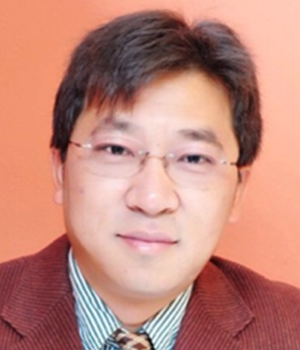
|
Dr. Gang Wu
University of Buffalo, United States
Dr. Gang Wu obtained his PhD in 2004 from the Harbin Institute of Technology, concentrating on electrocatalysis for electrochemical energy conversion. After postdoctoral trainings at Tsinghua University (2004–2006), the University of South Carolina (2006–2008), and LANL (2008–2010), he became a permanent staff scientist at LANL in 2010. Dr. Wu is now an Assistant Professor in the Department of Chemical and Biological Engineering at the University at Buffalo, the State University of New York since August 2014.
Click to read more.
His research focuses on development of nanostructured functional materials and catalysts for batteries, fuel cells, supercapacitors, water splitting, and electrochemical sensors. To date, he has authored and coauthored more than 90 scientific publications in prestigious journal including Science, Adv. Mater., Angew. Chem. Int. Ed., ACS Nano, Energy Environ. Sci., Acc. Chem. Res., Adv. Energy Mater., and so on. He is the author of 4 book chapters and holds 6 issued and pending patent applications. The novel non-precious metal oxygen-reduction catalysts, developed by Dr. Wu and his co-workers at LANL, have been internationally recognized as a breakthrough in metal-air batteries and low-temperature fuel cells, opening an avenue to use inexpensive and earth-abundant materials to replace precious metals for sustainable energy technologies.
More...
Hide this content. |

|
Dr. Fangming Jin
Shanghai Jiao Tong University, China
Dr. Fangming Jin is a Distinguished Professor at Shanghai Jiao Tong University and also a Visiting Professor and a Fellow of the Graduate School of Environmental Studies at Tohoku University (Japan). Dr. Jin received her Ph.D. from Tohoku University (Japan). After that she did her visiting research work before she became an assistant professor and then an associate professor at the same university. In 2007, she returned to China and became a Professor at Tongji University...
Click to read more.
and a Chair Professor sponsored by Chang Jiang Scholar Program (administered by Ministry of Education of the People’s Repubic of China). In 2010, she moved to Tohoku University (Japan) as a Professor. From June 2011, she has been appointed as a Distinguished Professor at Shanghai Jiao Tong University and also a Visiting Professor and a Fellow of the Graduate School of Environmental Studies at Tohoku University (Japan). Currently, her research focus is on the application of hydrothermal reactions for the conversion of biomass and CO2 into fuels and chemicals. She has authored about 200 scientific publications including peer-reviewed journal papers, patents, books and book chapters.
More...
Hide this content. |

|
Dr. Gary Yang
UniEnergy Technologies, United States
Dr. Gary Yang co-founded UniEnergy Technologies in 2012 and currently serves as CEO and President of the company, with a mission to commercialize new generation vanadium redox flow batteries (VFRB) and provide energy storage solutions for the ever increasing adoption of renewable powers and implementation of smart, reliable grids. Dr. Yang is a Fellow of ASM International. Previously, Dr. Yang was a Lab Fellow, the highest science and technology rank, at Pacific Northwest National Laboratory (PNNL) of the US Department of Energy (DOE).
Click to read more.
He played a pivotal role in establishing the Grid Energy Storage Program at the lab, and led the program that grew to over an $8M annual budget and conducted extensive RD&D in redox flow, Na-halide, and Li-ion batteries, and in the discovery of new battery concepts. Under Gary’s leadership, the PNNL team with over 30 scientists, engineers and post-doctorates made several breakthroughs in battery storage technologies including a new generation of vanadium redox flow batteries. Earlier, Dr. Yang was a Senior Scientist and later a Chief Scientist leading efforts in R&D of solid oxide fuel cells (SOFC) and hydrogen storage materials. He joined PNNL in early 2001, after 5 year experience as a materials engineer in the auto parts industry and extensive education and training in materials science, engineering and electrochemistry, at Jilin University, the University of Connecticut, and Carnegie Mellon University. Dr. Yang was selected as a Fellow of ASM International in recognition of “his outstanding contribution to advanced materials and electrochemical energy conversion and storage ….” He has published over 200 research articles, 13 book chapters and editorials, organized over 20 symposiums/conferences, and delivered numerous invited speeches. He is an inventor of over 50 US and foreign patents (including pending). His efforts in SOFC’s and VFRB’s won him twice the Federal Laboratory Consortium’s (FLC) Excellence in Technology Transfer Award, one of the most prestigious US government awards on technology development and commercialization.
More...
Hide this content. |

|
Dr. Lin Zhuang
Wuhan University, China
Prof. Lin Zhuang is a Professor in the Department of Chemistry at Wuhan University, and the Vice-Chair of the Physical Electrochemical Division of International Society of Electrochemistry (2011-2012) and the Chair of China Section of Electrochemical Society (2010-2011). Dr. Zhuang earned his Ph.D. in electrochemistry at Wuhan University in 1998. Then he joined the Department of Chemistry at Wuhan University as a lecturer, and was promoted to associate professor and full professor in 2001 and 2003, respectively.
Click to read more.
He was a visiting scientist at Cornell University from 2004 to 2005, and is an Adjunct Professor of Xiamen University. He serves an editorial board member of Science China: Chemistry, Acta Chimica Sinica and Journal of Electrochemistry. Dr. Zhuang has authored many research papers in high impacting journals such as Proceedings of the National Academy of Sciences USA, Angewandte Chemie; Journal of the American Chemical Society; Accounts of Chemical Research; Chemical Science; Energy & Environmental Science, etc., and book chapters in high-impacting Wiely and Springer books.
More...
Hide this content. |

|
Dr. Suddhasatwa Basu
Indian Institute of Technology, India
Dr. Suddhasatwa Basu is a Professor and Head of Department of Chemical Engineering at Indian Institute of Technology (IIT) Delhi India. Dr. Basu is the editorial board member for many international journals and presently Associate Editor of WIREs: Energy & Environment published by Wiley. Dr. Basu completed Ph.D. in Chemical Engineering from Indian Institute of Science, Bangalore in 1993 after completing B.Tech. in Chemical Engineering from Calcutta University and worked for four years (1994-1997) as a postdoctoral fellow...
Click to read more.
and as a visiting faculty (1997) at University of Alberta, Edmonton, Canada. He then joined IIT Delhi in 1998 as Assistant Professor in the Department of Chemical Engineering and currently he is Professor and Head of Chemical Engineering. He visited University of Alberta, Canada in 2000 and 2002, University of Newcastle, August 2005, University Karlsruhe, Germany 2006 and University of Newcastle upon Tyne, UK 2008 and 2010 as visiting professor. His broad research interests are in the area of interfacial and electrochemical engineering and their application in hydrogen energy and fuel cell technology. He has published 98 articles in high impact factor journals (72), conferences (26) and 2 patents. He is currently under taken 1 million USD of sponsored research projects from DST, GAIL, UKIERI, RCUK, DIT, DRDO. He is recipient of many awards, Visiting Fellow Royal Society UK, DAAD Fellow, UKIERI Award, Distinguish Alumni Award from Chemical Eng Department, Calcutta University, FITT award for best Ph.D/MS thesis at IIT Delhi. He has received Prof. R. D. Desai 80th Birthday Commemoration Medal & Prize, 2012, Indian Chemical Society, Prof. Bal Krishna Memorial Lecture - International Year of Chemistry, Indian Chemical Society, 2011. He is Fellow of Indian Chemical Society and Institute of Engineers. He has authored a book on ‘Recent Trends in Fuel Cell Technology published by Springer (2007). He has also contributed to ‘Policy Paper on India’s Roadmap to Hydrogen Economy’ published by INAE and ‘Fuel Cell Development in India’ by CII.
More...
Hide this content. |

|
Dr. Hong Zhu
Beijing University of Chemical Technology, China
Dr. Hong Zhu is a Professor in School of Science at Beijing University of Chemical Technology (BUCT), the Vice-Director of Department of Organic Chemistry, the Board Member of School Academy Committee, Academic Degree Committee, and Teacher Staff Training Committee. Dr。 Zhu is the Director-General of Institute of Modern Catalysis at the State Key Laboratory of Chemical Resource Engineering (BUCT). She is also the Board Committee member of Chinese Advanced Material Society, Chinese Society of Renewable Energy,...
Click to read more.
as well as Society of Railway Science and Technology. Dr. Zhu obtained her M.Sc and Ph.D from China University of Mining & Technology (CUMT) in 1991 and 1998, respectively. Dr. Zhu’s expertise areas include key materials such as alkaline membranes, composite membranes and nano-structured electrocatalysts for polymer electrolyte membrane (PEM) fuel cells including both acidic and alkaline PEM fuel cells. She authorized two books on “Fuel Cell Expended Systems” and “Development of Renewable Energy”, respectively. Dr. Zhu have won many awards including Innovation Award Of New Century Chinese Women (2006), Award for the Most Outstanding BeiQianWan Chinese People (2000); Award of S&T Innovation/Achievement (JiangSu Province, 2002); Award of Women S&T Innovation Contest (JiangSu Province, 2002); Award of Coal Industry S&T Innovation/Achievement (JiangSu Province, 2001); Award of Chinese National Coal Industry S&T Innovation/Achievement (2000); Award of TianYou-Zhan S&T Innovation/Achievement (2008); and Award of S&T Innovation/Achievement (Beijing, 2009).
More...
Hide this content. |
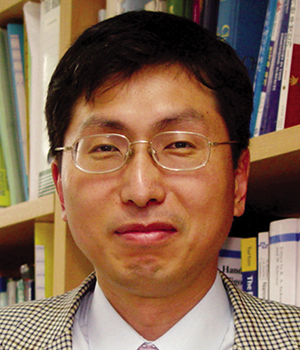
|
Dr. Yung-Eun Sung
Seoul National University, Korea
Dr. Yung-Eun Sung is a Professor in School of Chemical & Biological Engineering at Seoul National University, Korea. Dr. Sung is also a group leader in the Center for Nanoparticle Research at Institute of Basic Science, Chair of the Korea Section in the Electrochemical Society, and Vice-President of Korean Electrochemical Society. Dr. Sung obtained his B.S and M.S.Eng in Chemical Technology from Seoul National University in 1986 and 1988, M.A in Chemistry from Columbia University in 1992,..
Click to read more.
and Ph.D in Chemistry from University of Illinois at Urbana-Champaign (USA) in 1996, respectively. In 1996-1998, Dr. Sung did his postdoctoral research at the University of Texas at Austin, and was appointed as an Assistant Professor and then Associate Professor at Gwangju Institute of Science & Technology (Korea) during 1998 to 2004. In 2004, he joined Seoul National University as a Professor and also was appointed as director of center for Materials of Advanced batteries. Dr. Sung’s major expertise is electrochemical energy materials. Dr. Sung has published more than 250 technical papers in the area of electrochemical technology and energy conversion. His research has focused on electrochemistry, photoelectrochemistry and nanotechnology in the area of fuel cells, battery, and other energy conversion and storage. Now Dr. Sung serves as an Associate Editor for Elsevier Journal: Applied Catalysis B: Environmental.
More...
Hide this content. |

|
Dr. Qingfeng Li
Technical University of Denmark, Denmark
Dr. Qingfeng Li is recognized internationally by invitations as organizing committee, scientific advisory board member and chair at international conferences (> 40 times), plenary and keynote speaker (> 20 times). Currently, he is an associate professor at Department of Energy Conversion and Storage, Technical University of Denmark (DTU). His research areas include proton conducting materials, electrocatalysts and the related technologies e.g. fuel cells and electrolysers. Dr. Li received his Ph.D. in Electrochemistry from Northeastern University, China, in 1990.
Click to read more.
As a postdoctoral fellow, Dr. Li started in the early 1990´s the research on HT-PEM at DTU. He has participated/coordinated more than 20 EU and Nordic research projects within the HT-PEM fuel cell area, and is currently the leader of 4M Centre devoted to fundamental research om mechanism, materials, manufacturing and management of HT-PEMFCs, funded by the Danish Council for Strategic Research. Based on his contributions to the HT-PEM development he was in 2006 awarded Doctor Degree of Technices at DTU. He has published more than 120 peer reviewed journal papers, 3 authored/edited books and 10 book chapters, and nearly 200 conference presentations. Dr. Li has an H-index of 25 with a total citation of > 4000 times. Dr. Li has been involved in teaching 5 undergraduate courses and 6 graduate courses including a lecturing and an experimental course on Hydrogen Energy and Fuel cells at DTU. He is an active member of, among other, the Electrochemical Society and the International Society of Electrochemistry (and currently the region representative of Denmark 2012-now).
More...
Hide this content. |

|
Dr. Dingguo Xia
Peking University, China
Dr. Dingguo Xia is a Professor and Vice-Dean of the School of Energy and Resource Engineering at Peking University, and also the Chang-Jiang Professor selected by Chinese Ministry of Education. Dr. Xia is the Board executive Committee Member of Beijing Society of Chemical Engineering,and Society of Chinese Energy Science Instrument and Equipment. Dr. Xia obtained his Ph.D from University of Science & Technology Beijing. During 2004 to 2005, he worked as a visiting Professor at the National Research Council of Canada, and during 2002 to 2003,..
Click to read more.
he worked as a visiting Professor in Nants University, France. He has published 1 book, 3 book chapters and more than 100 papers in high-impacting journals. He has received 1 US patents and 30 Chinese patents. His current research interests are in the development of advanced electrode materials for lithium-ion batteries and fuel cells.
More...
Hide this content. |

|
Dr. Hasuck Kim
Daegu Gyeongbuk Institute of Science and Technology, Korea
Dr. Hasuck Kim is the President of the International Society of Electrochemistry (ISE) till the end of 2014, and a Fellow of the Korean Academy of Science and Technology and a Fellow of the ISE. Dr. Kim currently is the Chair Professor of Daegu Gyeongbuk Institute of Science and Technology (DGIST), a newly established research oriented graduate school and Professor Emeritus of Seoul National University (SNU) where he had retired after 33.5 years of service.
Click to read more.
Dr. Kim received his BS from the Department of Chemistry, SNU, M.Sc and Ph.D. from the University of Illinois at Urbana-Champaign. He spent 2 years at the University of Florida as a research associate. He, then, was appointed as an Assistant Professor in 1977 at SNU where he was a full Professor since 1987. He spent a year at the Division of Chemistry and Chemical Engineering, California Institute of Technology as a visiting associate in 1988. He was the Dean of College of Natural Sciences, SNU from 2002 to 2004. He served as the Vice-President and Dean of Graduate School of SNU from 2008 to August 2010. He had served as the Vice-President of the Korean Chemical Society in 2001, President of the Korean Electrochemical Society from 2000 for two years. Also, he was the President of the Society of International Gifted in Science from 2006 to 2012. He is a member of board of trustee, Korea Academy of Science and Technology. As for editorial services, he is a regional editor of Fuel Cells and editorial board member of Journal of Electroanalytical Chemistry and Analytical Sciences. His research interests are development of electroanalytical methods based on molecular recognition and molecular switching, and electrochemistry for fuel cells. He has published more than 170 refereed original papers, and 19 patents were registered or filed. He was awarded the Q. Won Choi Prize, Korean Chemical Society in 2003, Outstanding Achievements in Natural Science from Metropolitan Seoul City in 2008.
More...
Hide this content. |